Fixed vs roto: which telehandler is right for your project?
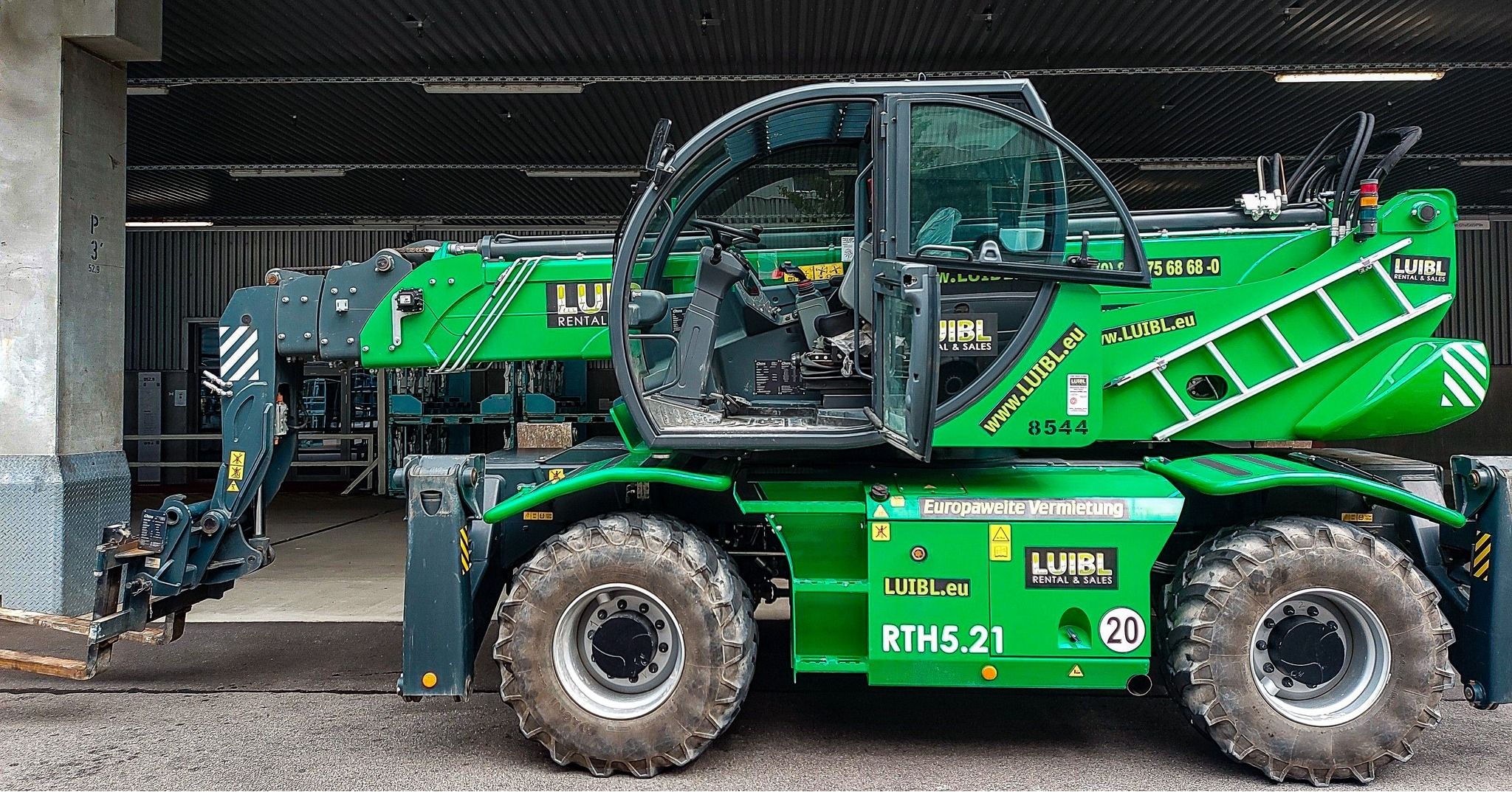
Choosing the right telehandler is one of the most critical decisions in construction planning. It affects not only daily rental costs, but also the pace of construction progress, the space required on site and the safety of your team. Planners often face the question: is a fixed telehandler sufficient, or does the enormous flexibility of a rotating model (Roto) justify the investment? As a specialist in work-at-height access, Luibl Rental offers not only a modern fleet but also the expertise to resolve this fundamental rental question. In this guide, we compare the statics, dynamics and cost-effectiveness of both systems in detail.
An overview of all telehandler designs, attachments and obligations can be found in the telehandler guide.
The fixed telehandler: the powerhouse for horizontal work
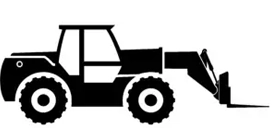
A fixed telehandler (often simply called a 'telehandler') is designed for maximum robustness and simple, powerful lifting operations. Because the superstructure is firmly connected to the chassis, the load distribution is straightforward.
Design advantages and statics
On a fixed model, the load is taken up mainly to the front. This allows a design built for extreme compressive loads.
- Pick-and-carry capability: fixed telehandlers are ideal for picking up loads on the forks and moving them across the site.
- Low centre of gravity: without a slewing ring, the centre of gravity is lower, which increases stability on uneven ground.
- Ease of operation: less complex control systems mean a shorter familiarisation time for staff.
When you should rent a fixed telehandler from Luibl Rental:
- Material handling: unloading trucks and transporting pallets over long distances on site.
- Earthworks & agriculture: use with a bucket for bulk material or earthworks.
- Budget focus: for projects where pure lifting power is needed and there is enough room to manoeuvre, the fixed telehandler is the most cost-efficient solution.
The roto telehandler: maximum efficiency through 360-degree technology
The rotating telehandler, 'Roto' for short, is the technological evolution of the telehandler. Brands such as Magni, Manitou and Merlo have developed machines that combine the functions of a forklift, a mobile crane and an aerial work platform in one machine. The game changer: continuous rotation A Roto from Luibl Rental has a superstructure that can rotate through 360 degrees (often continuously). This fundamentally changes the way of working:
- Stationary working: the operator positions the machine centrally once and reaches every point within the working radius without moving the chassis.
- Precision at height: thanks to rotation, loads can be swung into place against facades or into building openings with centimetre accuracy.
- Space saving: especially on urban sites, where every square metre counts, the Roto has the advantage because no manoeuvring space is needed. Magni technology: setting standards in the Roto class Luibl Rental relies heavily on Magni models. In the Luibl rental fleet, roto telehandlers reach lift heights of up to 38.90 m. Magni machines work with a digital load management system. Automatic attachment detection ensures that the machine immediately knows which load chart (forks, winch or basket) to apply.
Technical distinguishing features
To make the right choice, we need to take a closer look at the technical equipment, which often decides the success of a project.
Outrigger systems: scissor vs folding
A decisive difference lies in the stabilisation:
- Fixed telehandler: often has front stabilisers or works purely with the axle lock. This limits the working area to the front.
- Roto: uses complex outrigger systems. A distinction is made between folding outriggers (quickly ready for use) and scissor outriggers (variably extendable). Modern roto machines calculate the load capacity individually for each outrigger position - ideal where space is tight.
Load charts and reach
While fixed models are strongest up to 18 metres lift height, that is often where the range of roto machines only begins.
Vertical vs horizontal: a fixed telehandler quickly loses load capacity at large horizontal outreach. A Roto compensates for this better thanks to its massive counterweight and wide outrigger base.
The 3-in-1 solution: attachments make the difference
Versatility is the strongest argument for renting from Luibl Rental. Both machine types can be transformed with quick-change systems:
- Pallet forks: the standard for both types.
- Winches & load hooks: turn the telehandler into a mobile crane. With the Roto in particular, this often saves the cost of renting an expensive mobile crane.
- Baskets: equipped with a radio remote control, the roto becomes an aerial work platform. The operator can control the basket directly from the basket - maximum efficiency for facade work.
- Vacuum lifters: ideal for glass installation combined with the precise controls of a roto.
Cost-effectiveness: rental vs benefit
A roto has a higher daily rate than a fixed telehandler. So why does renting one from Luibl Rental often pay off more?
- Time savings: with no manoeuvring time, a Roto often completes tasks in half the time.
- Personnel costs: one machine replaces three. You need fewer operators and less space.
- Avoiding downtime: all-round capability means the machine is used all day (forklift in the morning, crane in the afternoon).
Safety and legal requirements
Safety comes first at Luibl Rental. Strict rules apply to both machine types:
- Operator qualification: for operating a telehandler, the employer ensures adequate operator training under the Code on Well-being at Work; on handover, the operator receives a briefing.
- Periodic inspection: all Luibl Rental machines are delivered with a current inspection certificate from an external technical inspection body (EDTC/SECT) and a maintenance report.
- Safety systems: modern load moment limiters prevent the machine from tipping on both types by automatically cutting out in the event of overload.
FAQ: frequently asked questions on the telehandler comparison
Can I also use a fixed telehandler with a basket?
Yes, provided the model is certified for it. However, outreach and flexibility are severely limited without a slewing function. For genuine work at height, we recommend the Roto or a specialised aerial work platform from Luibl Rental.
Which brands does Luibl Rental offer?
We carry telehandlers from Magni, Manitou and Merlo: Magni with high lift heights, Manitou with a broad range and Merlo with compact models.
Is the machine delivered to the site?
Yes, Luibl Rental organises delivery by low-loader to your site - punctually and reliably, throughout Belgium.