Logistics centres and high-bay warehouses: which aerial work platform for maintenance?
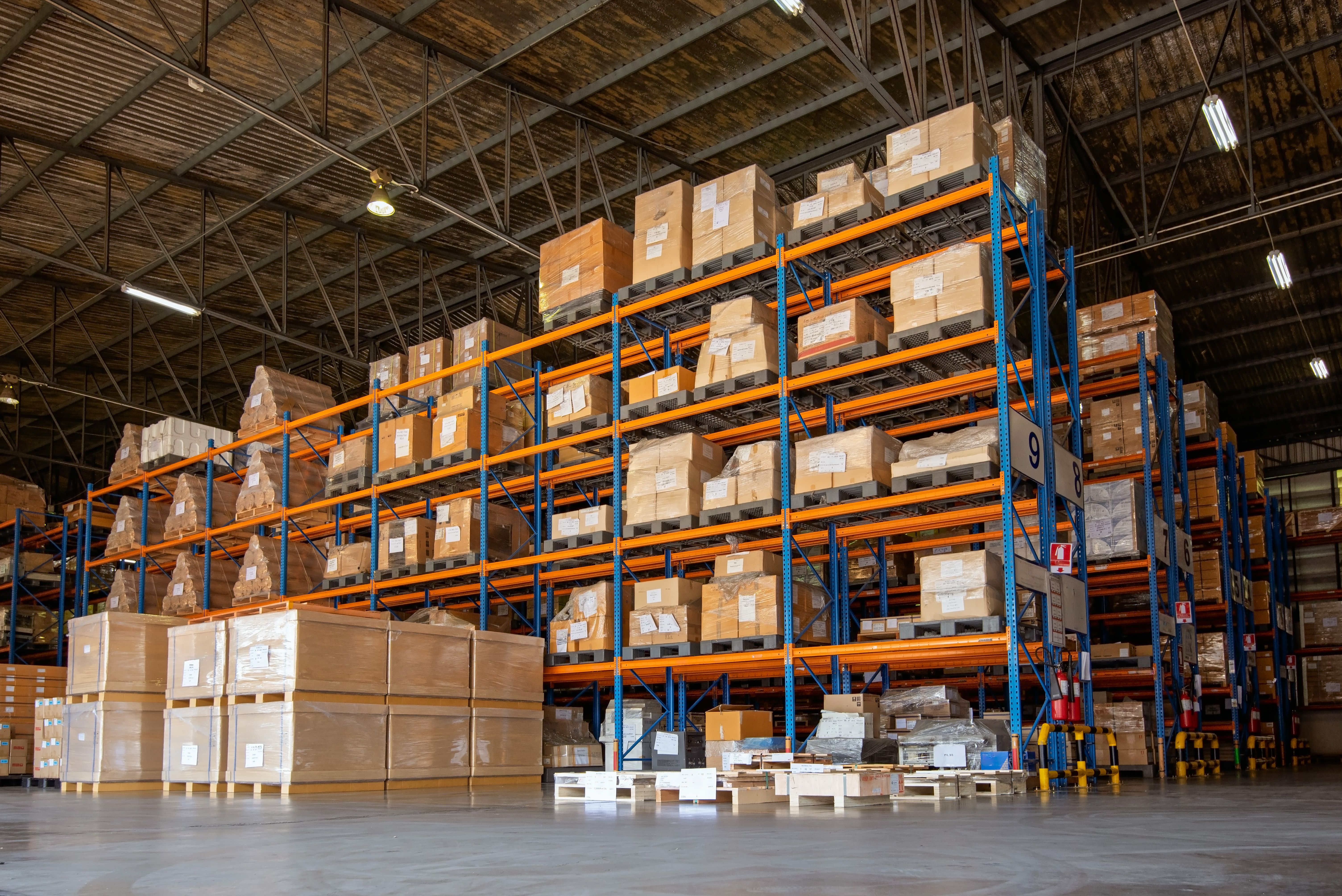
A defective sprinkler pipe on the top racking level, the annual stocktake at 12 metres, a light fitting hanging right above the narrowest aisle. Maintenance work in high-bay warehouses shares one problem: the racks are high, the aisles are narrow, and warehouse operations should continue as normally as possible in the meantime. Not every aerial work platform fits through these aisles - and not every one reaches high enough.
This article sets out which platform suits which situation in a high-bay warehouse and what to look out for when planning.
The two main solutions at a glance
For rack maintenance, stocktaking or replacing lighting at heights up to around 12.65 m, the mast lift is the most compact solution. Models such as the JLG Toucan or the Haulotte Star work purely vertically, without a lateral boom, and offer exactly the features a high-bay warehouse demands: a very narrow width that fits through tight aisles and standard doors, non-marking tyres that leave epoxy floors and industrial parquet undamaged, and an electric drive that works quietly and without local emissions alongside ongoing order picking. The point load capacity of around 200 kg is sufficient for tools and smaller spare parts (Mast lifts at Luibl Rental).
If that height is not enough, the high-bay scissor lift comes into play. This special class is built specifically for modern logistics centres where standard machines are either too wide or too low, and covers working heights from 18.50 m to 33.00 m. It is suitable for narrow aisles and matched to common aisle widths in high-bay warehouses, while load capacities of 500 to 1,000 kg also allow larger maintenance and conversion work. The flagship model in the Luibl rental fleet is the Holland Lift HL330_E14_4WDS with 33 m working height (High-bay scissor lifts at Luibl Rental).
Decision criteria: which platform suits which task
Working height is the first and most important filter: up to around 12 m a mast lift is usually enough; for the top levels of modern high-bay racking above 18 m, the high-bay scissor lift is the right choice. Both machine types are designed for narrow aisles, but the exact aisle width ultimately decides the specific model - checking the actual width in the warehouse is therefore worth more than an estimate based on rack height alone. It also matters whether the machine has to travel at full height: certain high-bay scissor lifts can do this, which saves considerable time when stocktaking across several rack bays, and this should be stated in the request. The floor surface - industrial parquet, epoxy or sensitive coatings - requires non-marking tyres, which are standard on both machine types in the Luibl rental fleet. And because warehouse operations usually continue as normal during maintenance, an electric drive is almost always the choice: quiet, odourless, with no exhaust fumes in the closed hall.
Typical applications and what to clarify before deployment
In everyday use, both platform types are mainly deployed for the annual stocktake on the upper rack levels, for sprinkler installation and maintenance under the hall ceiling, for replacing lighting above aisles and rack rows, for repairing damaged rack bays after forklift impacts, for laying cables and lines along the hall ceiling, and for converting and extending racking systems during ongoing operations.
To make sure the chosen machine actually fits on the day, more than just the rack height should be settled in advance. The exact aisle width decides whether the model fits through at all, while ceiling height and obstacles such as sprinkler pipes, ventilation ducts or cable trays often reduce the usable working height more than expected. State the floor surface in your request so that the right tyres are supplied from the start, and because maintenance during regular order picking usually requires closing an aisle, it pays to agree the time window clearly. If the machine runs across several shifts, battery charging times also need to be planned.
Safety in high-bay warehouses
Because high-bay warehouses almost always have forklift and pedestrian traffic at the same time, the aisle concerned must be closed off during the work so that nobody crosses paths. On the platform itself, personal fall protection is required, in line with work at height under the Code on Well-being at Work, and every operator must have received instruction before first use, in line with applicable Belgian safety rules. Proof of periodic inspection by an external technical inspection body (EDTC/SECT) is available on handover for every machine in the Luibl rental fleet.
How the rental works
It starts with the request stating rack height, aisle width, floor surface and the planned time window. This is followed by the matching quote including transport, supplemented if needed by a discussion of the aisle width based on photos or plans. Delivery is by our own low-loader fleet, with the operator team briefed directly in the warehouse. During the maintenance or stocktaking work, technical support is available for questions, and at the end the machine is collected on the agreed date - with a credit for early return.
The right height for your warehouse
Whether a compact mast lift for rack maintenance up to 12 m or a high-bay scissor lift for the top levels up to 33 m - what matters is the exact combination of height, aisle width and floor surface. Luibl Rental advises you on the right machine before the wrong platform blocks the aisle.
-> Request a no-obligation quote now - we will find the right platform for your warehouse.