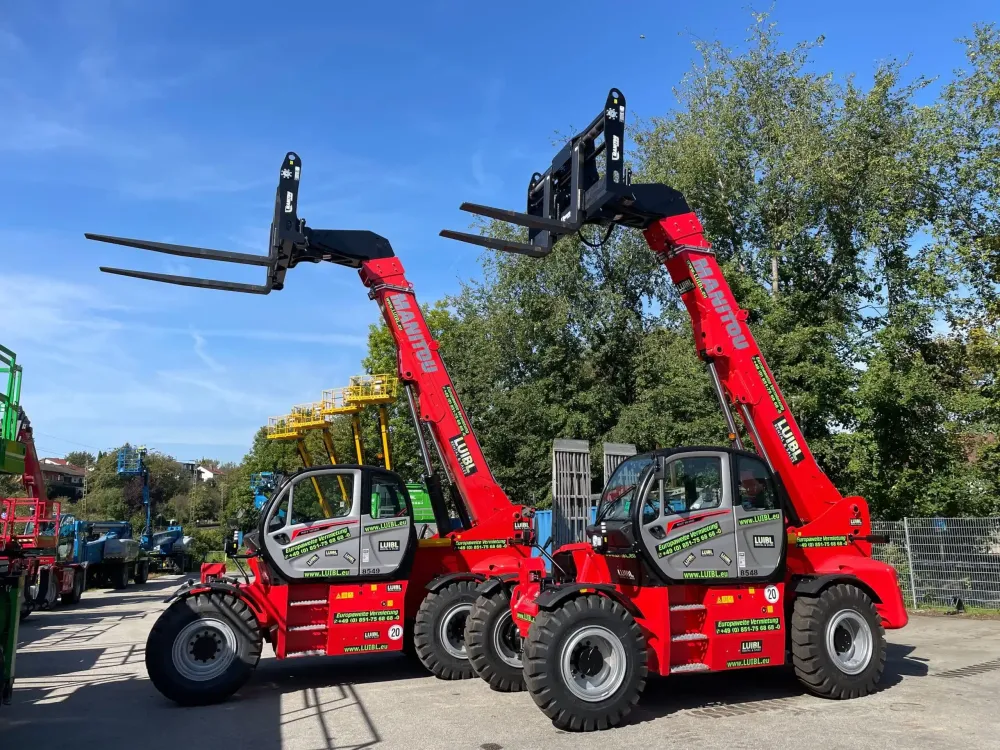
Rent Manitou: powerful telehandlers and forklifts for your project
Anyone moving loads to height and over obstacles on site soon reaches the limits of a standard forklift. As soon as lift height, outreach and off-road capability are needed at the same time, there is no way around a telehandler. When you rent a Manitou, you get exactly this combination in a single machine: high load capacity, long reach and a chassis that also works on unpaved ground. At Luibl you get the right machine for your specific load, your access height and your ground conditions - available at short notice and with our own delivery logistics.
This overview shows you which Manitou range suits which application, what to look out for in terms of load chart and reach, and how renting from Luibl works.
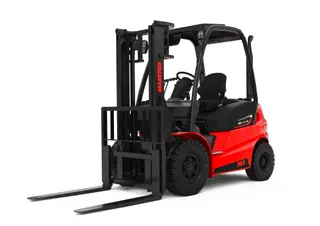
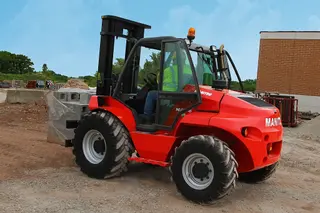
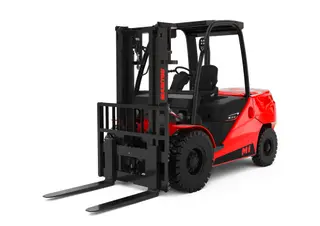
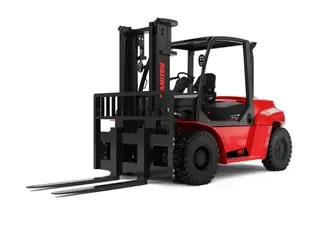
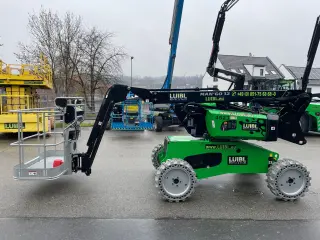
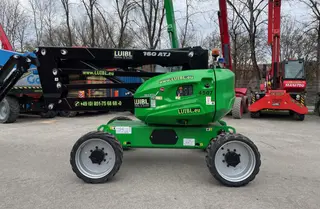
The right Manitou model for your application
Manitou divides its telehandlers into two basic designs that differ clearly from a technical point of view. If you know the difference, you choose the right machine faster and avoid costly rental mistakes.
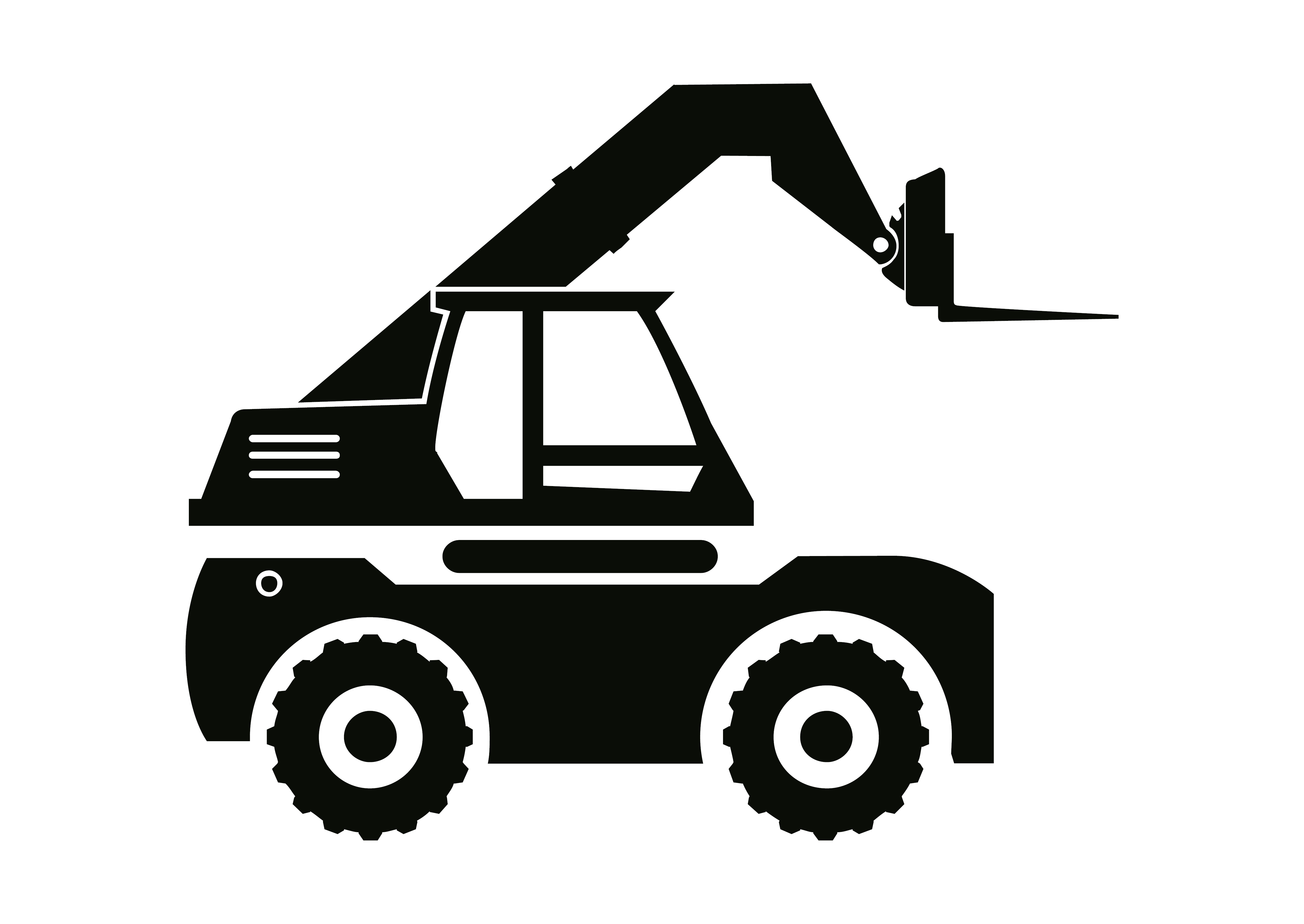
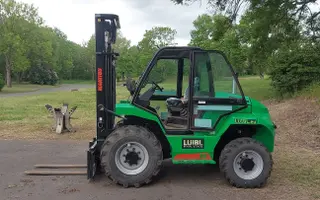
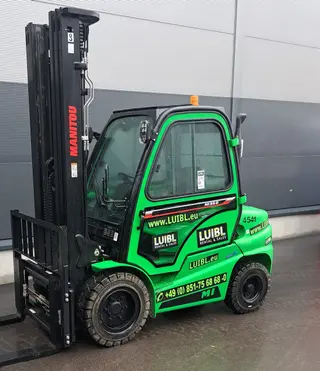
Manitou MT (fixed): On the MT range, the telescopic boom extends in a fixed direction to the front. The upper structure does not rotate. This design is the first choice for classic material handling: picking up pallets, stacking building materials, supplying scaffolding and upper floors, loading and unloading trucks. For a given size, fixed telehandlers usually offer the higher payload and work quickly in repetitive transport cycles. As a rough-terrain forklift, they easily replace a counterbalance forklift on uneven ground.
Manitou MRT (rotating): The MRT range features an upper structure that rotates continuously through 360 degrees. The roto telehandler can pick up loads and set them down elsewhere without the machine itself having to be repositioned. This is the decisive advantage on confined sites, in fixed working positions or when work has to be done all around - for example with a platform for installation work at height. In combination with outriggers, an MRT telehandler reaches great lift heights and outreach with controlled stability.
Two criteria almost always determine the choice: the required lift height and the outreach at the place of use. A fixed telehandler scores with speed, payload and lower rental costs. A roto telehandler scores with precision and flexibility when the machine stays in one position and the working radius has to be covered all around.
As a rough guide: for pure material transport on an open area, an MT is usually sufficient. As soon as you are in a fixed position and serve several set-down points or heights, the MRT plays to its strengths.
Unsure about the required load capacity? Our experts will help you calculate your requirements.
Technical specifications and areas of application at a glance
The most important technical parameter of any telehandler is not a single maximum value but the load chart. It describes which load may be lifted safely at which reach and boom angle. The relationship is clear: the stated maximum load capacity only applies at minimum reach, i.e. with the boom retracted close to the machine. The further the boom extends and the flatter the boom angle, the more the permissible load drops. Anyone who only looks at the rated load and ignores the reach risks overloading - and in the worst case the machine tipping over.
For planning, this means: you need to know the actual load at the furthest position required, not just the absolute weight. This is exactly where prior consultation with the rental company pays off.
The hydrostatic drive of many Manitou telehandlers ensures sensitive manoeuvring, stepless power transmission and high tractive force at low speed. Combined with four-wheel drive, four-wheel steering and chunky off-road tyres, the telehandler becomes a full-fledged heavy-duty forklift for unpaved ground, mud or gravel.
When is a Manitou telehandler preferable to a standard forklift? Whenever at least one of these conditions applies:
- Height: You need to lift loads several metres - higher than a counterbalance forklift can reach.
- Ground: The ground is uneven, soft or unpaved.
- Reach: You need to set loads down over an obstacle (e.g. over a pit, scaffolding or onto an upper floor).
- Flexibility: Changing tasks require different attachments (forks, platform, winch, bucket).
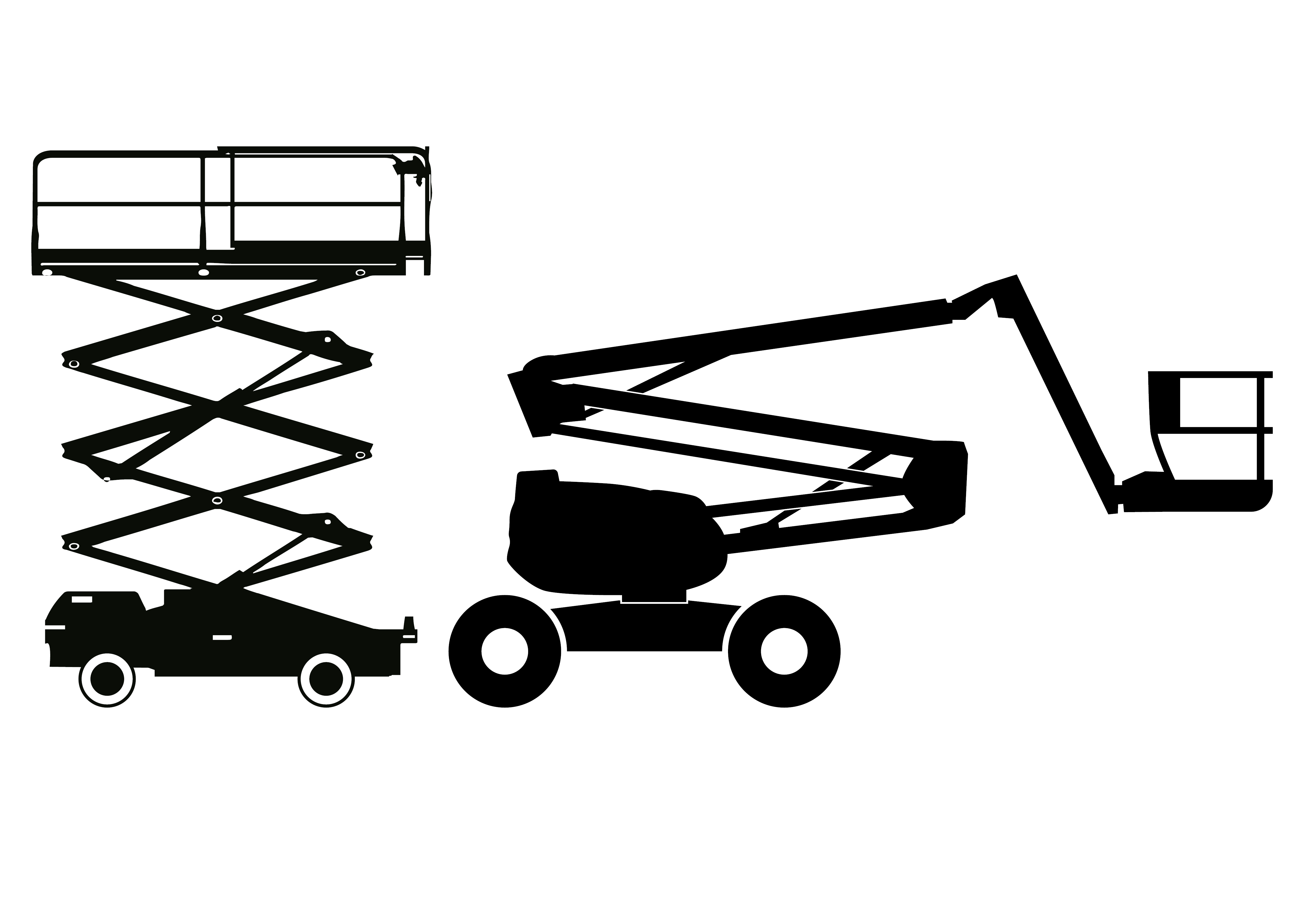
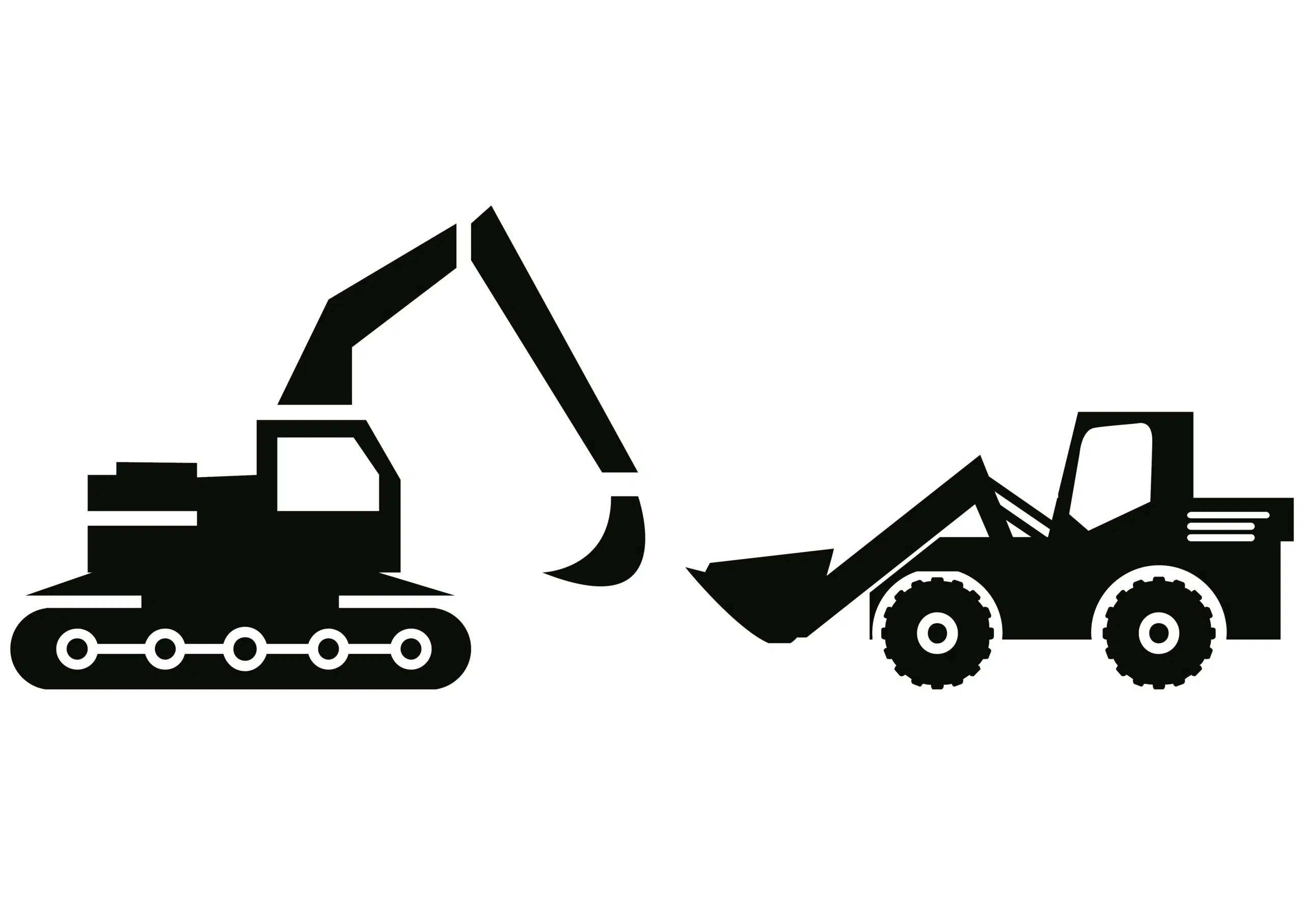
A Manitou thus covers applications that would otherwise require several machines - from access at height with a platform, similar to an aerial work platform, to heavy material handling. For work at height involving people only, also look at our aerial work platform rental; for pure earth and material handling, wheel loader rental is another option.
Rental checklist: the right machine in 3 steps
Before you request a telehandler, clarify these three points - this saves time and costs and prevents rental mistakes:
- Check the ground: Is the ground load-bearing, level or sloping? This determines the tyres, axle load and whether outriggers are needed.
- Calculate the load: Determine the actual load weight and the position (height + reach) where it will be set down. Only this combination determines the right model according to the load chart.
- Measure access heights and widths: Gates, passageways, ceiling heights and turning circles limit the machine size that can be used. Measure critical bottlenecks in advance.
Why professionals rely on the Luibl rental fleet
The difference between a well-planned site and a stalled one often lies in machine logistics. Luibl operates its own rental fleet and its own transport fleet. This brings three tangible benefits:
- Short waiting times: Because delivery and collection are coordinated in-house, you do not wait for external hauliers. The machine is there when it is needed.
- Direct availability of current Manitou generations: You rent modern technology instead of outdated machines - with corresponding operational reliability and efficiency.
- Plannable delivery throughout Belgium: delivered by low-loader to your site.
Instead of booking an 'off-the-shelf' machine, you agree load, reach and attachment with the Luibl team in advance - so exactly the right machine arrives on site.
Request an individual quote for your project's machine requirements now.
Safety and operation: Belgian well-being rules and ISO as the benchmark
Telehandlers are material handling machines with high kinetic energy. In Belgium, their use is subject to clear rules. The Belgian well-being at work legislation (Act of 4 August 1996 and the Code on Well-being at Work, Book IV - work equipment) governs the safe use of work equipment and forms the basis for operators having the required qualification and receiving adequate training ensured by the employer. ISO 3691-1 defines the international safety requirements for self-propelled industrial trucks and their verification. Taking these standards seriously protects staff and machines - and avoids liability risks.
In practice this means: only instructed, competent personnel operate the telehandler. Luibl provides an operator briefing on handover so that your staff can drive the rented machine safely.
FAQ: Renting Manitou

Which insurance is mandatory for the rental period?
How quickly is delivery to the site made?
Is on-site instruction for operating staff possible?
How does the load capacity change at maximum outreach?
Does Luibl also offer telehandlers with attachments such as a work basket or winch?
Check availability and rental terms - or request an individual quote for your project's machine requirements directly. The Luibl team will advise you on the right Manitou range, the load capacity at your reach and site logistics.